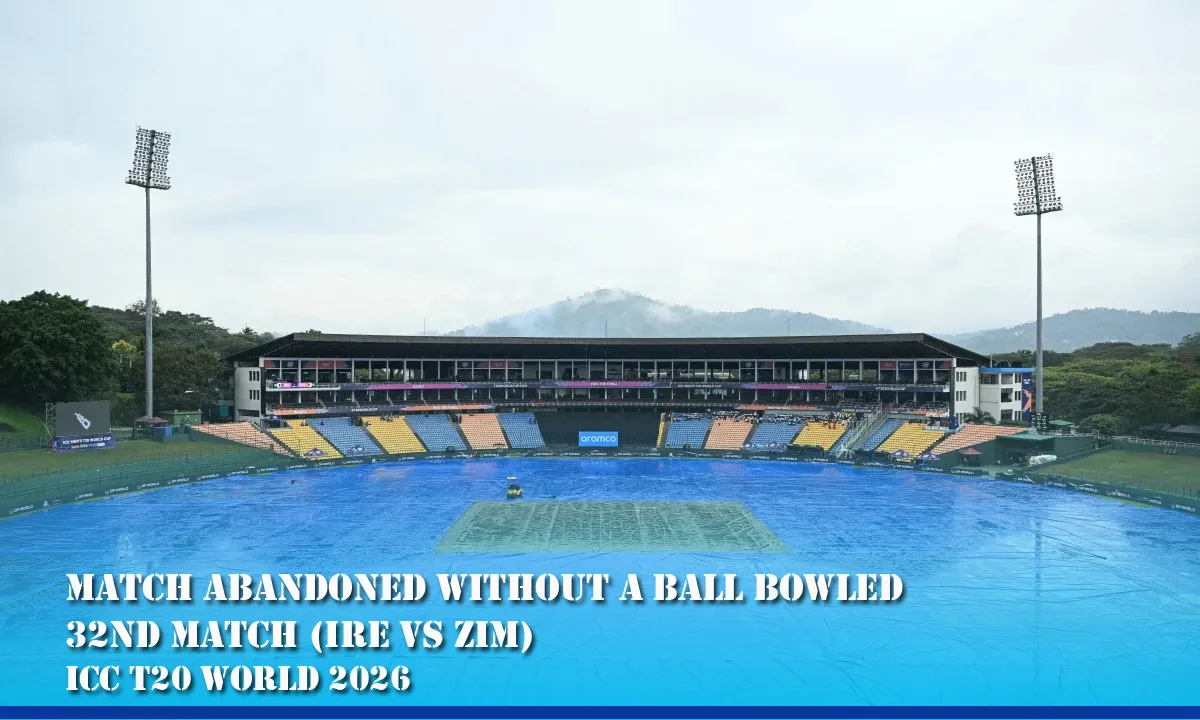
They danced in the Pallekele stands, and you could feel the rhythm extending beyond the ground itself. From the bars in Harare to the streets in Bulawayo, Mutare to Masvingo, Zimbabwe had latched onto that single rhythm – that renewed belief.
Zimbabwe’s entry into the Super Eight in the T20 World Cup wasn’t just qualification – it felt like the nation itself had breathed out in collective relief. The kind of breathing out that makes you want to celebrate with every inch of your body and transform aisles in the stadium into dance floors and strangers into family.
There were songs, too. Zimbabwean cricket fans aren’t merely vocal in their support – they’re singers and dancers, and their repertoire is long, loud, and highly infectious. For years, it was their anthem of hope, their attempt to will their team to victory even when results were wanting. Now, it is their anthem of victory – what this team has managed in Sri Lanka that seemed impossible, especially after eight long and lean years of wanting.
Missing out on the ODI World Cups in 2019 and 2023 stung – but missing out on the inaugural 20-team tournament in 2024, and being the sole Full Member to do so, cut even deeper. For some, it felt like the final act in a long, quiet decline – cricket’s story being kept alive on life support for two decades itself.
Yet Zimbabwe’s problems are not entirely about sport.
They are a microcosm of a country’s problems. A country that has been through colonization, civil wars, instability, political problems, violence, hyperinflation, unemployment, and long stretches of uncertainty. When a team is concerned about fuel to attend training, it is not just a sport; it is a fight to survive.
But Zimbabwe is a country that knows how to survive.
True to their African spirit—a plan is made and a way is found—cricket in Zimbabwe is not just alive; it is thriving. It is not just a shadow of the so-called golden era in the late 1990s and early 2000s.
And let us be honest here: that team, though talented, was also a representation of a smaller percentage of the country. Cricket was not yet a sport by the people. It is a sport that underwent a bold and tumultuous transformation—a walkout by white players, a self-imposed exile from Test cricket—to align cricket in Zimbabwe with a country that represents it.
And when something truly belongs to the people, it is rarely neat. It is raw. It is imperfect. It is resilient.
This Super Eight qualification is more than a sporting milestone. It is proof that the game survived the storms — political, financial, social — and found new roots. It belongs to a new generation. To new voices. To packed stands singing old songs with fresh meaning.
So yes, they danced in Pallekele.
And they’re still dancing.